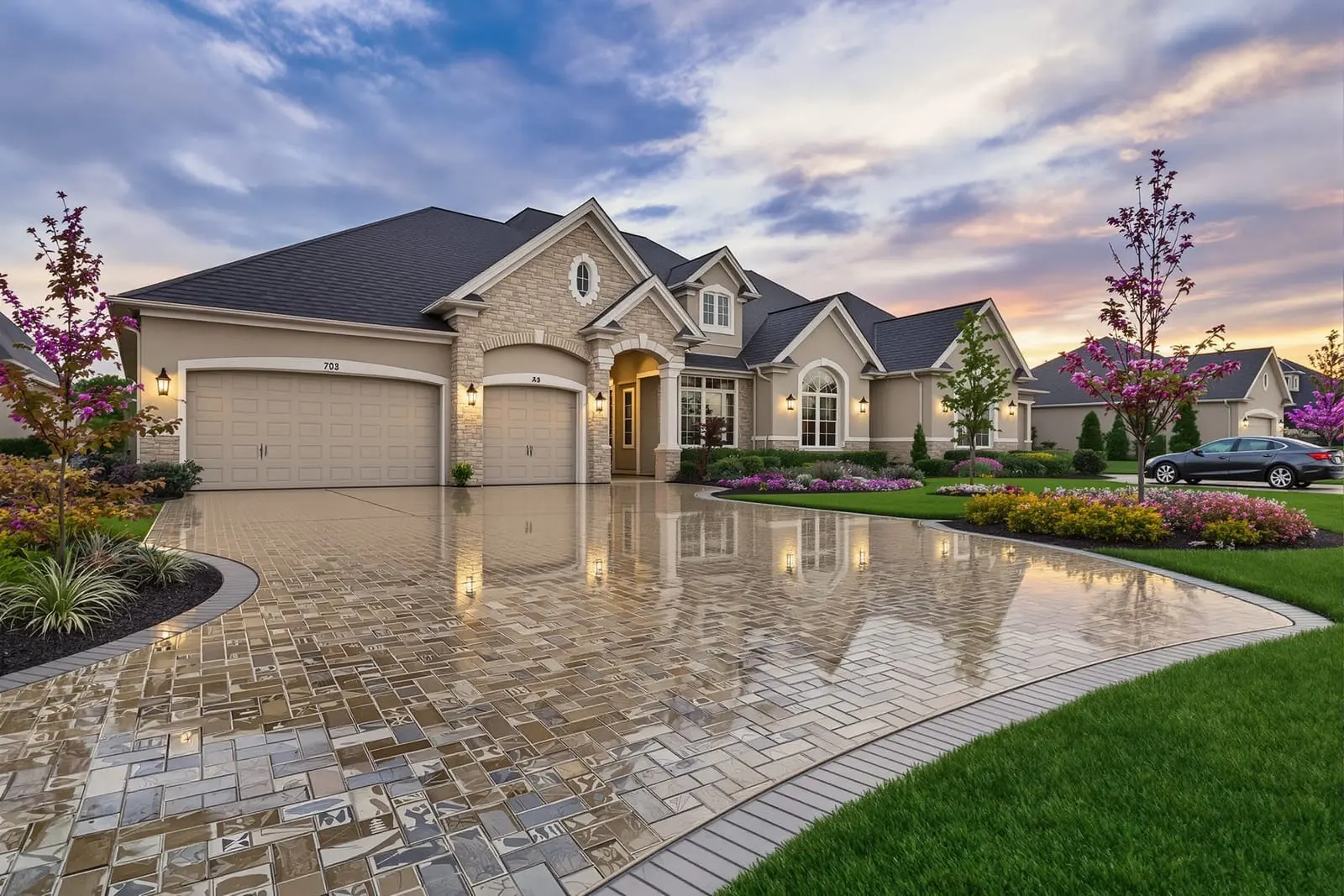
Primetime Concrete Austin installs commercial stamped concrete in Austin, TX that upgrades building entries, plazas, and courtyards. We use patterned stamps and integral colors to create upscale looks that hold up to heavy foot traffic. Decorative concrete can highlight key areas while staying easy to maintain.
Primetime Concrete Austin provides professional commercial stamped concrete throughout Austin, TX and the surrounding area. Our licensed, insured crew delivers safe, clean, on-time work with a free estimate before anything begins. Call (737) 271-7931 or request your free quote.
Commercial stamped concrete that fits how Austin really uses space
Commercial stamped and decorative concrete has to do more than look good for a photo. In Austin it has to handle food trucks backing up, summer heat, sudden downpours, and years of foot traffic. Primetime Concrete Austin focuses on commercial stamped concrete that balances appearance, traction, and durability for local businesses.
We work with properties across the metro area, including retail centers, restaurants, breweries, offices, churches, schools, and multifamily communities. Each project starts with how people will actually use the space. For example, a restaurant patio in South Austin needs a different finish and sealer than a loading zone in an industrial park in Pflugerville.
Instead of pushing a single pattern, we look at your brand, surrounding architecture, and maintenance budget. That might mean using a slate texture with subtle integral color for a Class A office entry, or a wood plank stamp in warmer tones for a family friendly outdoor dining area. Our goal is to give you a surface that welcomes customers and still holds up to daily abuse.
How the commercial stamped concrete process really works
Successful stamped concrete is about timing and control, not just pattern mats. Our commercial process at Primetime Concrete Austin follows a tested sequence so the finished surface cures strong and consistent across large areas.
First, we evaluate soil conditions and drainage. Many Austin sites have expansive clay or fill from past grading. We often recommend 4 to 6 inches of compacted road base, sometimes more for drive lanes, to avoid future settling and cracking. We also set slopes to push water toward drains instead of toward door thresholds.
Next we set forms and install rebar or wire mesh reinforcing based on load expectations. For commercial patios we typically use #3 or #4 rebar in a grid pattern tied together so the slab behaves as one piece. For drive lanes and dumpster pads we usually increase slab thickness and tighten rebar spacing.
We then pour a high quality concrete mix appropriate for the season. In hot Austin weather we often adjust set times and schedule pours early in the morning. While the surface is still plastic but firm enough to support weight, we apply color hardener or confirm integral color, then broadcast release powder or use liquid release.
Stamping is done in stages, working systematically so texture is consistent and pattern lines stay straight. We have crews dedicated to pattern layout so control joints line up with pattern lines as much as possible. After stamping, we detail grout lines and edges, then return to wash, neutralize excess release, cut control joints, and apply sealer once the slab has cured appropriately.
Design options tailored to Austin businesses
Most commercial clients know they want something better than plain gray concrete, but they are not sure what is possible. We guide you through options that make sense for our climate and your brand rather than a catalog of patterns that may not be practical outdoors in Central Texas.
Patterns: Popular commercial choices include ashlar slate, fractured slate, cobblestone, running bond brick, board formed or wood plank, and textured skins with minimal joints. For spaces where carts or wheelchairs are frequent, we often suggest textures that are smoother under wheels but still slip resistant.
Colors: We use integral color, color hardeners, or stains depending on budget and performance needs. Neutral grays and charcoals work well for modern office parks. Warmer tans and terracotta tones feel at home near Hill Country style stone and brick. For branding, we can incorporate banding or inset borders in accent colors that echo your logo or storefront.
Finishing touches: Joints can be sawcut in decorative patterns to mimic tile or stone grids. We can add exposed aggregate bands at transitions for visual interest and traction. For outdoor kitchens at venues or rooftops, we often pair stamped flatwork with smooth machine finished pads under kitchen lines for easier equipment placement and cleaning.
Cost drivers and how we keep budgets predictable
Commercial stamped concrete costs in Austin depend on more than square footage. Primetime Concrete Austin gives line item proposals so you understand where your budget is going and what can be adjusted without sacrificing performance.
Main cost drivers include slab thickness and reinforcement (heavier loads require more concrete and steel), pattern complexity, color system (integral color versus hardener versus stain), demolition of existing surfaces, access for trucks and equipment, and required night or weekend work. For example, a simple textured skin patio with one integral color will cost less per square foot than a multi color ashlar slate driveway that requires phasing around an operating business.
We often help clients control costs by simplifying pattern choices in low visibility zones, using decorative borders at entries instead of stamping entire parking lots, or combining broom finished structural slabs with stamped overlays in customer facing areas. On larger projects, we can stage work to reduce downtime, which can be a hidden cost for active businesses.
Every proposal includes recommendations for sealer type and maintenance schedule so you can plan long term ownership costs, not just the initial pour. This is especially important around restaurants and bars where grease and spills are common.
Common problems and how we prevent them in Central Texas conditions
Austin weather and soils create specific challenges for stamped and decorative concrete. Our team at Primetime Concrete Austin has seen the same issues repeat around town, which is why we design our installs to prevent them from the start.
Heat related issues: In summer, concrete can set too fast and stamping can leave inconsistent texture or color. We schedule early pours, use mix designs with proper set times, provide shade and evaporation control, and staff extra labor when needed to keep pace with the setting concrete.
Soil movement and cracking: Expansive clay soils and poorly compacted fills can cause cracking and settling. We evaluate subgrade conditions, add base material where needed, and place control joints strategically. While hairline cracks are possible in any concrete, our approach reduces uncontrolled cracks and helps them follow joints where they are less visible.
Sealer failures and slipperiness: Over sealed or incorrectly sealed stamped concrete can become slick, especially when wet. We choose commercial grade sealers suited to traffic type and add traction additives where appropriate. For restaurant patios and pool areas we prioritize slip resistance over extreme gloss. We also educate staff on cleaning methods that will not damage the sealer or create patchy spots.
Permits, codes, and coordination on Austin commercial projects
Commercial concrete work in Austin often involves more than just placing a slab. Depending on the location and type of work, you may need permits from the City of Austin or coordination with Travis County or neighboring jurisdictions like Round Rock or Cedar Park.
For work that affects sidewalks, public right of way, or accessible routes, the city may require review to ensure ADA compliance, correct slopes, and appropriate tactile surfaces. Primetime Concrete Austin can coordinate with your architect or civil engineer to make sure decorative elements stay compliant. This might include using stamped patterns within acceptable slope limits and maintaining smooth transitions at thresholds and curb ramps.
At retail centers and multifamily properties, property management companies and HOAs sometimes have guidelines on color palettes and finishes. We review these with you during design so you do not run into approval delays. For projects near trees or in older areas of town, we also account for existing roots and utilities, working with utility locate services before excavation.
We regularly coordinate with general contractors, landscapers, and building trades so the concrete schedule fits the broader construction timeline and does not delay openings or inspections.
What to expect when you hire Primetime Concrete Austin
Our goal is to make commercial stamped and decorative concrete predictable, from the first meeting to final walkthrough. Your project typically follows a clear path so you always know what is next.
Consultation and site visit: We meet on site, walk traffic paths, look at drainage and shade patterns, and discuss how the area will be used at different times of day. We bring physical color charts and pattern samples so choices are made in your actual light conditions instead of a showroom.
Proposal and scheduling: You receive a written scope that specifies thickness, reinforcement, pattern, color system, joint layout concept, and sealer type. Once approved, we schedule around your business operations. For active businesses we often phase work to keep at least one entrance open at all times.
Construction and cleanup: During work, we protect adjacent finishes, landscaping, and storefronts from splatter and dust. Stamping crews keep noise and disruptions as minimal as possible. After sealing, we give you written curing and re opening guidelines so you know when foot traffic, furniture, and vehicle traffic can return.
Maintenance guidance: Before we leave, we review cleaning recommendations, reseal timelines, and what to avoid, like harsh deicers or pressure washing too aggressively. Many clients set up a multi year reseal plan so decorative surfaces keep their color and texture despite Austin sun and heavy use.
“
Professional commercial stamped & decorative concrete, done right the first time, quality materials, honest pricing, and results that last.
Primetime Concrete Austin
Commercial Stamped & Decorative Concrete Across Our Service Area