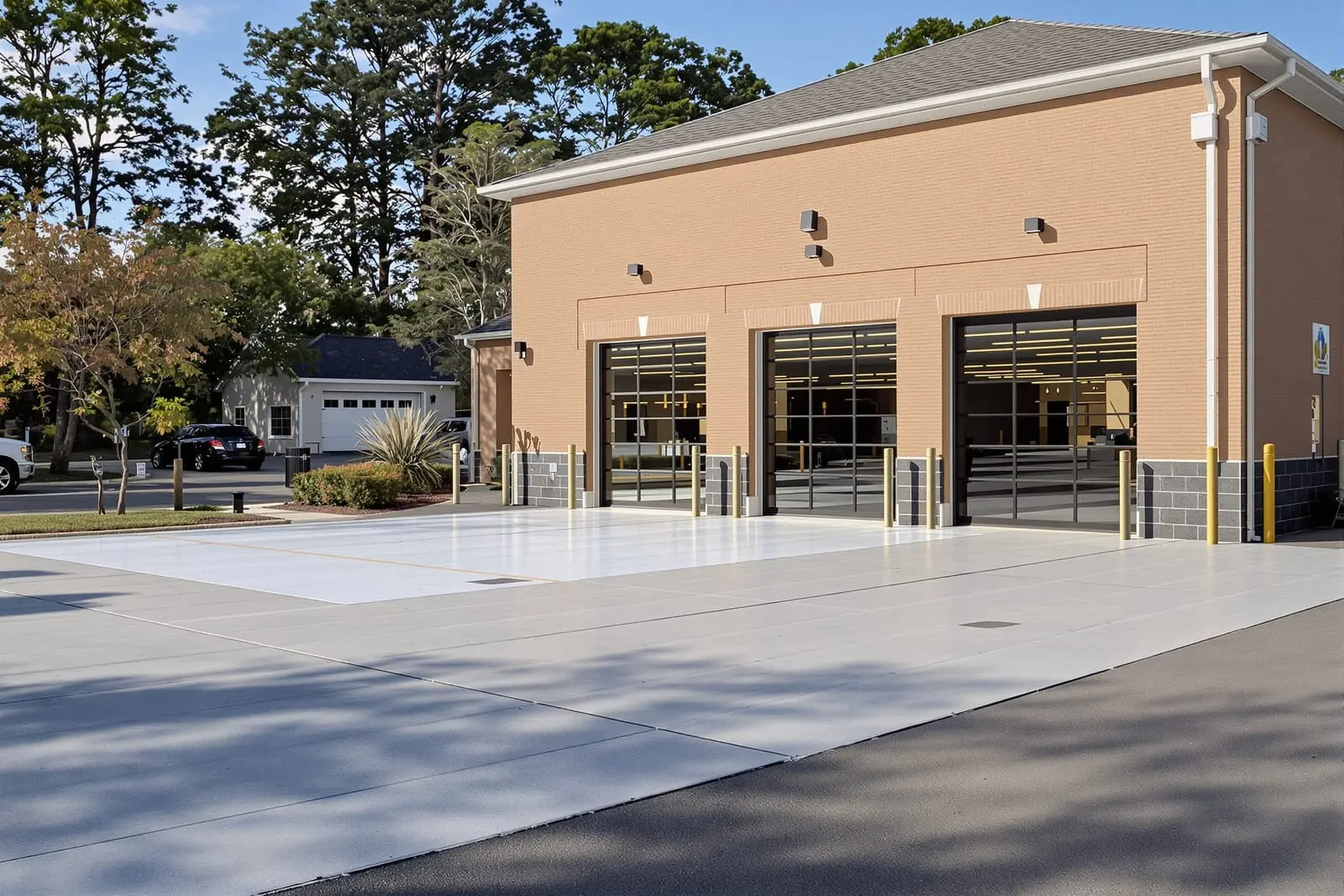
Primetime Concrete Austin builds commercial concrete slabs in Austin, TX for loading docks, equipment pads, and outdoor work areas. We design reinforced concrete to handle point loads from trailers, forklifts, and racking. Our team coordinates elevations and dock heights to match your building and traffic patterns.
Primetime Concrete Austin provides professional commercial concrete slab throughout Austin, TX and the surrounding area. Our licensed, insured crew delivers safe, clean, on-time work with a free estimate before anything begins. Call (737) 271-7931 or request your free quote.
Loading Docks & Commercial Slabs Built for Austin Workloads
Primetime Concrete Austin designs and pours commercial concrete slabs and loading docks that match how your operation actually runs. Before we talk thickness or rebar, we ask about what is rolling across that slab every day: 53-foot trailers, forklifts, pallet jacks, or delivery vans. The axle loads, turning patterns, and how often those areas see traffic all drive the design.
For loading docks, we look at dock height relative to the trucks you use, the approach slope your drivers prefer, and how drainage will move water away from doors. For commercial slabs, we consider racking layouts, machine locations, and where heavy point loads like pallet staging will sit. By tying the design to real loads and traffic patterns, we reduce cracking, settlement, and edge damage that often show up a few years after a generic slab is installed.
Because we work only in Central Texas, we understand how Austin clay soils expand and contract, how summer heat speeds up curing, and how sudden downpours affect subgrade prep. That local experience is built into every recommendation we make for your loading docks and commercial slabs.
Site Evaluation and Subgrade Prep for Austin Soil Conditions
Long lasting commercial concrete slabs start below the concrete, in the dirt and base material. Primetime Concrete Austin begins with a site visit to evaluate soil type, existing pavement, drainage paths, and access for trucks and pump equipment. In many areas of Austin you will find expansive clay that holds water and swells. If that is under your new dock or warehouse slab, it can crack and lift the concrete if not handled correctly.
We typically strip organics and soft material, then proof roll the area with loaded equipment to identify weak spots. Any pumping or rutting sections are undercut and replaced with compacted base, usually crushed limestone flex base or a similar engineered material common in Central Texas. We compact in thin lifts and frequently use a plate compactor or roller with moisture conditioning so the base is dense and uniform.
For loading dock aprons and truck courts, we pay special attention to wheel paths and turning areas where heavy trucks grind the surface. These sections often receive additional base thickness or higher compaction standards. Around dock pits and doorways we improve subgrade support to prevent the slabs from settling at the building edge, a common problem when the existing soil is not properly tied into new work.
Commercial Concrete Slab Design, Thickness, and Reinforcement
Every commercial concrete slab and loading dock in Austin should be designed around its actual loads, not a guess or one size fits all approach. Primetime Concrete Austin typically installs warehouse and shop slabs in the 5 to 8 inch range, with loading dock aprons and heavy truck areas often 7 to 10 inches thick. Thicker is not always better if the base is poor, so we balance slab thickness with quality subgrade preparation.
Reinforcement options usually include #4 or #5 rebar on a grid pattern or structural fiber reinforcement mixed into the concrete. For high load dock aprons we often use rebar at 12 inches on center each way, with dowels tying the apron into the building slab to control differential movement. Around dock leveler pits and ramp transitions we place extra steel to handle impact and edge loading.
We typically specify a 4,000 psi or higher concrete mix for loading areas, often with low water to cement ratios and admixtures that improve workability in the Texas heat. In exterior truck courts and loading docks that see deicing salts on rare winter ice days or chemical exposure from operations, we may recommend air entrainment and additional surface hardeners. Joint spacing, joint type (cut or formed), and load transfer devices like dowels are planned during design, not guessed once the trucks show up.
Construction Process: Forming, Pouring, and Curing in Central Texas Climate
Once design is set and subgrade is compacted and tested, Primetime Concrete Austin sets forms that define slab thickness, slope, and edges around dock pits, bollards, or ramps. Proper slopes are critical around loading docks so water runs away from doors and does not pond under trailers. We usually design for at least 1 percent slope away from the building where drainage allows.
On pour day we schedule concrete trucks to match slab size and local traffic conditions. In busy Austin corridors or downtown projects, we often start early morning to beat congestion and midday heat. Concrete is placed using chutes, buggies, or a pump truck depending on access. We vibrate around rebar, dowels, and embedded items like anchor bolts to remove air pockets and ensure solid consolidation.
Finishing is tailored to use. Loading dock aprons and outdoor slabs usually receive a broom finish for slip resistance. Interior commercial slabs may get a hard trowel finish or be prepared for polished concrete. Because Austin summers can accelerate drying, we use curing compounds, water curing, or curing blankets as needed to slow moisture loss. Proper curing in the first week significantly reduces surface dusting and random cracking over the life of the slab.
Scheduling Around Austin Weather and Business Operations
Heat, sudden thunderstorms, and your day to day operations all matter when planning a loading dock or commercial slab project. In Central Texas, the best combination of moderate temperatures and predictable weather is usually found in spring and fall, which makes these peak seasons for larger slab pours. That said, with proper admixtures and curing practices, we pour quality slabs year round.
For active warehouses, distribution centers, and retail back-of-house areas, Primetime Concrete Austin works with you to phase the project. We can divide large truck courts or dock aprons into multiple pours so you maintain access for deliveries. In some cases we schedule work on weekends or off hours to keep critical doors open. We discuss curing times up front so you know exactly when forklifts, passenger vehicles, and heavy trucks can safely use the new concrete.
Rain is a real factor in Austin, especially during stormy periods. We monitor forecasts closely and do not place concrete when weather threatens to wash out a fresh slab. If a sudden storm pops up while we are pouring, our crews are trained to protect the concrete surface, secure plastic sheeting, and manage runoff so the slab finish and curing are not compromised.
Cost Drivers, Common Problems, and How We Prevent Them
Commercial concrete slab and loading dock costs vary with slab thickness, reinforcement type, base preparation, access, and total square footage. Projects that require demolition of old pavement, saw cutting around existing structures, or significant grading will cost more than a straightforward greenfield pour. Hard to reach back of building locations in tight Austin lots often require pump trucks or extra labor to move concrete.
Common problems we see on poorly built slabs include early joint spalling at dock doors, cracking along truck wheel paths, and ponding water where slopes were not properly set. Primetime Concrete Austin prevents these issues by overbuilding critical edges, using doweled joints at key transitions, and checking slopes with laser equipment before and after pour. On expansive soils we sometimes recommend thicker base, a vapor barrier, or even geogrid reinforcement depending on your long term plans for the property.
If you already have a failing dock or slab, we can assess whether targeted repairs, partial replacement, or full reconstruction makes the most sense. Sometimes grinding high spots and installing proper joint sealants solves functional issues. Other times, chronic settlement or broken rebar cages mean replacement is a better investment. We walk you through options with clear pros and cons, including how each choice affects downtime and future maintenance.
Permits, Codes, and Why Local Experience Matters
Commercial concrete work around loading docks and building slabs often involves more than just pouring concrete. Many Austin projects require coordination with city inspectors, compliance with the International Building Code as adopted locally, and sometimes review when work affects accessible routes or fire lanes. Primetime Concrete Austin is familiar with local permitting processes and typical expectations from Austin code officials.
We consider clearance for fire access, Americans with Disabilities Act ramp slopes where required, and the impact of new slabs on on-site drainage patterns. For projects connected to tilt wall buildings or structural dock pits we coordinate with your engineer or provide a referral to one familiar with local conditions. Detailed documentation of rebar placement, concrete tickets, and joint layouts is provided when your project or lender requires it.
Because we live and work here, we know the industrial areas near the airport, warehouse corridors along major highways, and the older commercial buildings closer to downtown. Each has typical soil issues, access constraints, and code considerations. That neighborhood level knowledge helps us anticipate challenges before they slow your job, so your new loading docks and commercial concrete slabs go in smoothly and perform for decades.
“
Professional loading docks & commercial slabs, done right the first time, quality materials, honest pricing, and results that last.
Primetime Concrete Austin
Loading Docks & Commercial Slabs Across Our Service Area