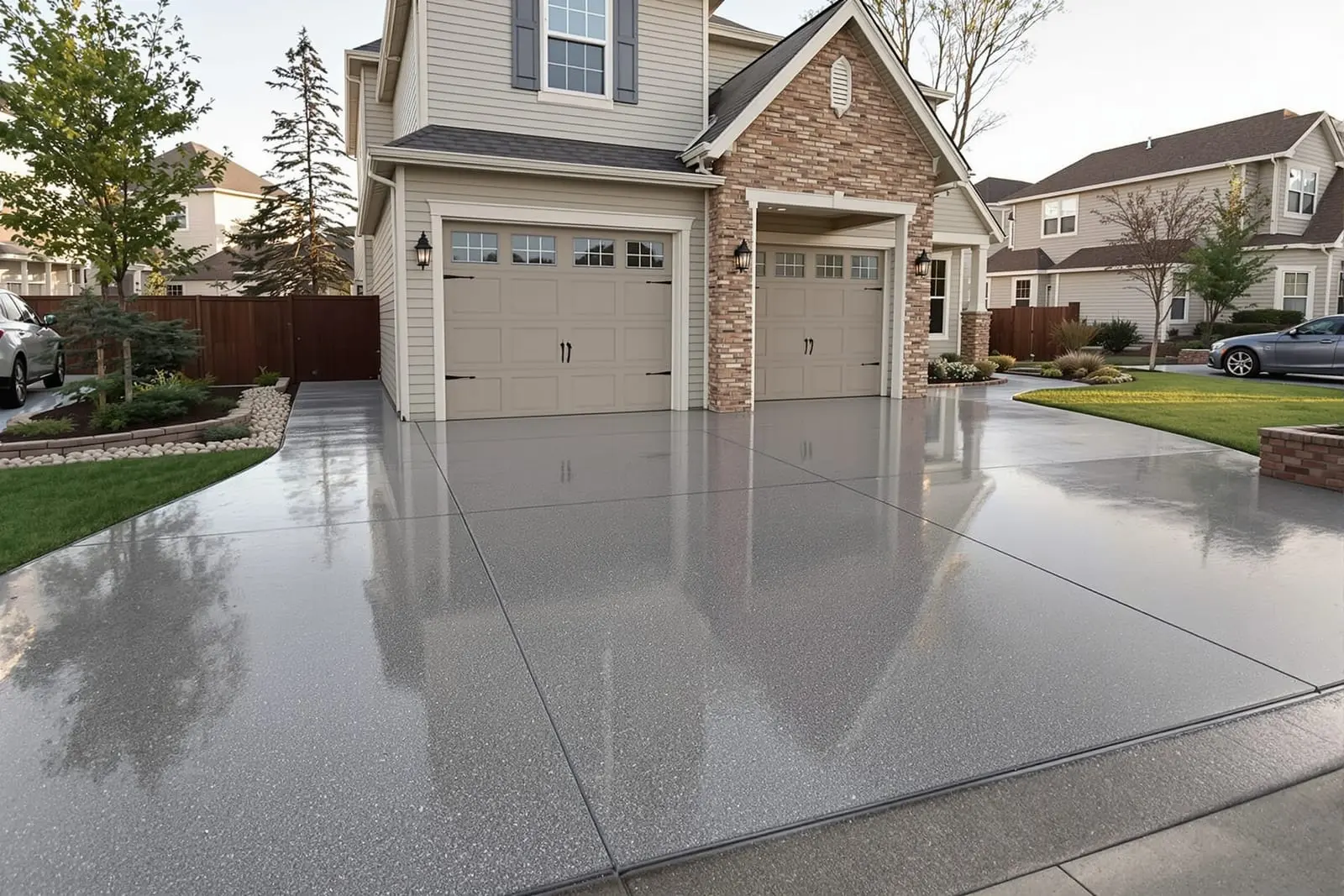
Primetime Concrete Austin installs concrete garage floors in Austin, TX that stand up to vehicles, tools, and storage. We pour flat, level slabs with proper thickness and reinforcement for garages and basements. Our smooth finishes are ideal for epoxy coatings or stain, giving you a clean and functional space.
Primetime Concrete Austin provides professional concrete garage floor throughout Austin, TX and the surrounding area. Our licensed, insured crew delivers safe, clean, on-time work with a free estimate before anything begins. Call (737) 271-7931 or request your free quote.
Concrete Garage Floors Built for Austin Heat, Hail, and Daily Use
A concrete garage floor in Austin has to do more than just look smooth. It needs to handle hot tires in August, the occasional hail storm mess, and years of parking, tools, and storage. At Primetime Concrete Austin, we design garage and basement slabs specifically for Central Texas clay soils and our big temperature swings.
When we visit your property, we start by looking at how your garage or basement is used. Is it only for parking, or will it double as a workshop or gym? Do you plan to add cabinets, lifts, or heavy equipment? These details affect slab thickness, reinforcement, and finish options. A basic residential concrete garage floor is usually 4 inches thick, but if you run a small business out of the garage or park a heavy truck, we may recommend 5 inches with upgraded reinforcement.
Local codes and neighborhood drainage patterns matter too. Many Austin lots have a slight slope toward the alley or street, and older homes on the east side often have settlement issues from expansive soil. We check the existing structure, door clearances, and where water currently flows before we recommend any plan. This helps prevent the common problems we see around town, like puddling near the garage door or water tracking into the house after a storm.
How We Install or Replace Your Garage & Basement Concrete Floors
A solid concrete garage floor starts with proper preparation. Primetime Concrete Austin begins by removing any old, failing concrete, tile, or epoxy down to a stable base. If your subgrade is clay-heavy, which is common across Austin, we may bring in compacted road base or select fill to create a more stable platform before any concrete is poured.
We then set forms to establish floor elevation and slope. For a garage, we typically pitch the slab slightly toward the door or a floor drain so spills and wash water do not sit in the middle of the floor. In a basement or lower-level area, slope is coordinated with any existing drains or sump systems so that water has a defined path and does not end up against walls.
Reinforcement is next. For most residential projects, we use either steel rebar on a grid or welded wire mesh, sometimes both for heavier use. In some cases, especially on problem soils, we also use fiber-reinforced mixes. This combination helps control cracking and adds strength where hot tires, tool drops, and point loads from jacks or workbenches are expected.
Only after the base is compacted and reinforcement is placed do we pour. For a concrete garage floor, we commonly use a 3,000 to 4,000 psi mix suitable for drive-on surfaces. In hotter months we plan our pour times in the morning when possible and may use set-control additives to ensure we have enough working time to place and finish properly, even on 100 degree days.
Finish Options: From Plain Concrete to Workshop-Ready Floors
Your concrete garage or basement floor does not need to be plain gray unless you want it that way. Primetime Concrete Austin offers several finish options that balance traction, looks, and maintenance for our local conditions.
For a simple, durable surface, a machine-troweled smooth finish with a light broom texture is common. Smooth enough to sweep easily, but not so slick that it becomes unsafe when wet. In garages that see a lot of rainwater from vehicles or frequent washing, we typically recommend some form of broom or light texture for safety.
If you want an upgraded look or easier cleanup, we can prep new or existing concrete for a coating. Epoxy systems create a hard, chemical-resistant surface, good for oil, brake fluid, and other automotive spills. Polyurea or polyaspartic topcoats, which cure faster, can be better in Austin’s temperature extremes and for customers who want to use the garage again quickly. For basements or hobby spaces, stained or sealed concrete can give a more finished, interior look while still handling moisture better than many floor coverings.
We also pay close attention to joints and transitions. Proper control joints help manage where minor cracking occurs and make it easier to install coatings later. At the garage door line, we set elevations so weatherstripping seals properly and there is not a trip edge as you enter from the driveway.
Cost, Common Problems, and What Affects Your Price
The cost of a new concrete garage floor or basement slab in Austin depends on several real-world factors, not just square footage. Primetime Concrete Austin walks you through each driver so there are no surprises.
Access is a big one. A front-facing garage with an open driveway is faster and cheaper to work on than a basement space that requires pumping concrete around or through the house. Soil conditions also matter. If we find soft spots, old fill, or organic material under the existing floor, we must correct that with excavation and compacted base, or you risk cracks and settlement later.
Thickness and reinforcement level affect price and performance. A light-use 4 inch slab with standard reinforcement costs less than a 5 inch slab with a tighter rebar grid sized for heavy vehicles or machinery. Finish choice, such as high-build coatings or decorative stains, adds to the budget but may save you money on long-term cleaning and repairs.
The most common problems we are called to fix in Austin garages and basements are heaving or settled slabs, cracks that telegraph through old coatings, and moisture issues where floors meet walls. In many cases, we can remove only the failed sections and tie into sound concrete with dowels and proper joint planning. Where water is the main problem, we might recommend drainage improvements outside the structure, surface slope changes, or vapor barriers under any replacement slab.
By understanding these factors before you start, you can prioritize where to invest, like extra reinforcement or drainage corrections, and where you can stay basic, such as a standard broom finish instead of decorative upgrades.
Why Work With Primetime Concrete Austin for Your Floor Project
Local experience matters a lot with garages and basements. Primetime Concrete Austin has worked on homes in central neighborhoods like Hyde Park and Crestview, newer builds in Circle C and Avery Ranch, and hillside properties around Westlake. Each area has its own soil behavior, drainage quirks, and layout challenges, and we factor those into your floor design.
We handle the project from planning through cleanup. That includes scheduling inspections when required, coordinating with other trades if you are remodeling, and protecting adjacent areas of your home and landscaping. On replacement projects, we use saws with dust control where possible, haul away debris promptly, and keep your driveway and street as clear as the work allows.
Communication is straightforward. Before we start, we outline what will happen each day, when you can walk on the new concrete, and when vehicles can return. In Austin’s humid seasons, cure times and coating applications need to be timed carefully, and we will give you specific instructions rather than vague ranges.
If you are considering a new concrete garage floor, converting part of the garage into livable space, or improving a basement or lower-level slab, Primetime Concrete Austin can help you choose a solution that matches how you actually use the space, not just what looks good in photos.
“
Professional garage & basement concrete floors, done right the first time, quality materials, honest pricing, and results that last.
Primetime Concrete Austin
Garage & Basement Concrete Floors Across Our Service Area