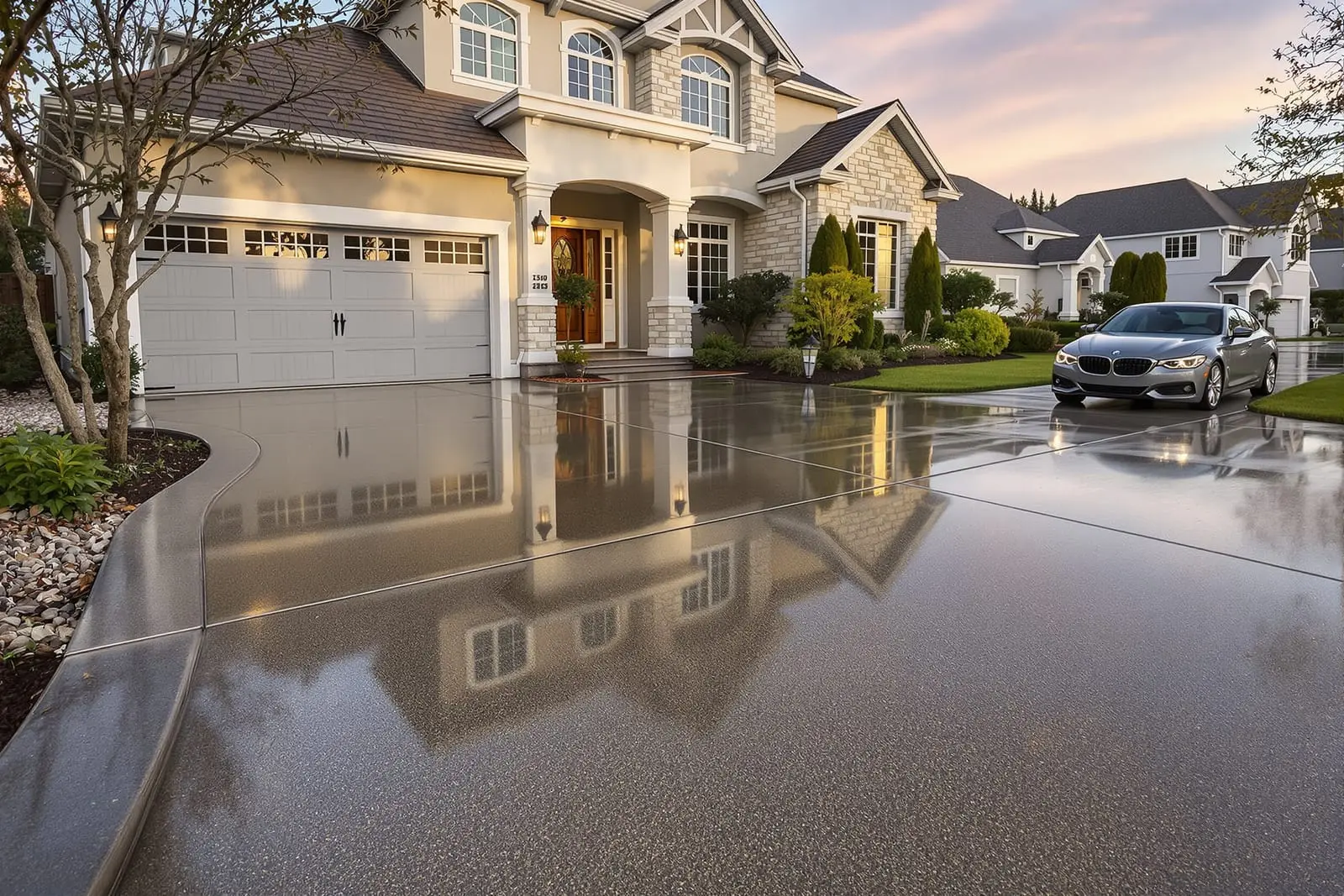
Protect your investment with professional concrete sealing in Austin, TX from Primetime Concrete Austin. We clean and seal driveways, patios, and walkways to resist moisture, oil, and UV damage. Regular maintenance keeps surfaces looking sharp and helps prevent cracking and premature wear.
Primetime Concrete Austin provides professional concrete sealing throughout Austin, TX and the surrounding area. Our licensed, insured crew delivers safe, clean, on-time work with a free estimate before anything begins. Call (737) 271-7931 or request your free quote.
Protecting Your Concrete From Central Texas Weather
Unsealed concrete in Austin takes a beating. Our hot sun, sudden thunderstorms, and the occasional freeze all work together to break down the surface. Primetime Concrete Austin focuses on concrete sealing that holds up to this climate, not just something that looks good for a few weeks.
Concrete sealing creates a protective barrier on driveways, patios, pool decks, walkways, and garage floors. It blocks water, oil, and UV rays from soaking in and breaking down the slab. Around Austin, the most common issues we see on unsealed or poorly sealed concrete are surface dusting, light scaling, and early hairline cracking from moisture movement.
We look at how your concrete is actually used. A steep South Austin driveway that sees hot tires in August needs a different product than a shaded back patio in Round Rock or Pflugerville. If you have decorative concrete, like stamped or stained, the sealer type and application method matter even more, since the wrong product can turn the surface cloudy or slippery.
Before we recommend any concrete sealing, we check age, previous coatings, drainage, and existing damage. That way we are not just putting a shiny coat on top of a problem that will show up again after the next heavy rain or summer heat wave.
How Our Concrete Sealing Process Works
Primetime Concrete Austin follows a detailed step-by-step process so the sealer bonds properly and lasts as long as possible in local conditions.
First, we inspect the slab. We look for cracks, spalling, flaking, or areas where old sealer is peeling. If you have white powder on the surface (efflorescence), tire marks, oil stains, or rust spots, we note those because each requires a different prep approach.
Next is cleaning and surface prep. For driveways and most outdoor flatwork, we usually start with a professional pressure wash, followed by degreasers on automotive oil or cooking grease. If there is an old failing sealer, we may need to chemically strip or mechanically etch the surface so the new sealer can bond. For interior or smooth surfaces, we tone down the pressure and rely more on scrubbers and cleaners to avoid damaging the finish.
Once the surface is cleaned and dry, we address repairs. Non-structural cracks are routed and filled with flexible repair material so they will move with the slab rather than just pop back open. Small spalled spots can often be patched and blended so they do not stand out after sealing.
Then we apply the sealer. For exterior concrete sealing we typically use professional grade penetrating or film-forming sealers, chosen based on use and appearance goals. We apply with sprayers, rollers, or a combination, maintaining a consistent wet edge to avoid lap lines. Most residential projects get one or two coats, with specific timing between coats based on the product.
Finally, we manage cure and traffic. In Austin’s heat, sealers can flash dry too quickly if applied in direct midday sun. We schedule work to avoid the worst heat when needed, and we will tell you exactly when you can walk, park, or place furniture back on the surface, usually within 24 to 72 hours depending on the material.
Sealer Options, Finish Choices, and Slip Resistance
Not every concrete sealer is right for every situation. Primetime Concrete Austin walks you through practical options instead of a one-product-fits-all pitch.
For most driveways and high traffic areas, we often recommend penetrating sealers, such as silane or siloxane based products. These soak into the concrete, help repel water and deicing salts, and leave a very natural, low sheen look. They do not peel because they live inside the concrete instead of sitting just on top.
On patios, pool decks, or decorative stamped concrete, we may use acrylic film-forming sealers. These bring out color, add light to medium sheen, and make cleaning easier. Where there is standing water or a lot of foot traffic around pools, we add fine anti-slip additives into the sealer to improve traction without making the surface rough on bare feet.
For garages and some interior workspaces, we sometimes use higher build coatings, like industrial grade acrylics or polyaspartic systems over properly prepared concrete. These are more resistant to hot tires, chemicals, and abrasion. They require more prep and careful moisture testing, but they provide a more durable finish for people who work on cars or use heavy tools.
We will also talk plainly about aesthetics. Glossy sealers can highlight imperfections, so if your concrete already has patchwork or heavy crack repairs, a penetrating or low sheen product may look better. If you have integrally colored or stained concrete, we choose sealers that will not amber excessively in the Texas sun.
If you have had issues with slick sealed concrete before, we can perform a small test area with texture additive or a different sheen level so you know what to expect before the entire surface is done.
Concrete Maintenance in Austin: What Really Matters
Concrete sealing is not a one-time, forget-it-forever job. Austin weather and use patterns determine how often you need maintenance, and Primetime Concrete Austin is upfront about realistic timelines.
With normal traffic, a good penetrating sealer on exterior flatwork may last 5 to 10 years before reapplication is needed, though high exposure driveways on busy streets may be closer to the low end of that range. Film-forming sealers on decorative surfaces often need refreshing every 2 to 4 years because UV exposure and foot traffic slowly wear them down.
Between sealing cycles, basic care goes a long way. We recommend rinsing or light washing driveways every few months to remove grit that acts like sandpaper under tires. For patios and pool decks, cleaning up leaf piles quickly helps prevent tannin staining. Oil and grease spills should be absorbed with kitty litter or absorbent first, then treated with concrete-safe degreaser.
In Austin, one of the biggest enemies of concrete is uncontrolled water. Make sure gutters and downspouts are not dumping water right at the slab edge. If we notice drainage issues during an estimate, we will point them out because standing water on or next to concrete shortens the life of any sealer.
We also advise watching for early warning signs. Dull or patchy sheen on stamped concrete, new dark spots that stay wet longer than surrounding areas, or easy absorption of water when you splash the surface all indicate it may be time to re-seal. Catching it early usually means simple cleaning and re-coating rather than strip and re-do.
If you are planning other exterior work, like landscaping or painting, we can help you schedule concrete sealing at the right point in the project so heavy equipment or overspray does not damage fresh sealer.
Costs, Scheduling, and What To Ask Before You Hire
Concrete sealing cost in Austin depends mostly on square footage, condition of the slab, and the type of product used. A clean, newer driveway that only needs light washing and a single penetrating sealer coat will be on the lower end. Old driveways with oil saturation, layers of failing sealer, or heavy crack repair work will cost more because most of the time is in prep.
Decorative or stamped concrete usually sits a bit higher because it needs careful product selection, often two thin coats of sealer, and sometimes non-slip additives. Pool decks can require more masking and protection of nearby water features and coping, which affects labor time.
Primetime Concrete Austin provides written estimates that break down key items, such as cleaning, repairs, type of sealer, number of coats, and any optional upgrades like anti-slip additives. This helps you compare contractors on more than just a single number.
Before you hire anyone for concrete sealing, ask what specific product line they plan to use, how they will prepare your particular surface, how they manage Austin heat and sudden storms in their scheduling, and what the recoat or maintenance plan looks like. If a contractor cannot answer those clearly, you may be looking at a short-lived result.
We schedule around weather and temperature as much as possible. In peak summer we often aim for earlier morning or late afternoon application so sealer does not flash dry on contact. During wetter months, we build in weather windows so your freshly sealed concrete is not exposed to a downpour before it cures.
When you call Primetime Concrete Austin, we start with a site visit, not a guess over the phone. We take moisture and condition into account, explain realistic expectations, and help you choose a concrete sealing and maintenance plan that fits how you actually use your property, not just how it will look on day one.
“
Professional concrete sealing & maintenance, done right the first time, quality materials, honest pricing, and results that last.
Primetime Concrete Austin
Concrete Sealing & Maintenance Across Our Service Area