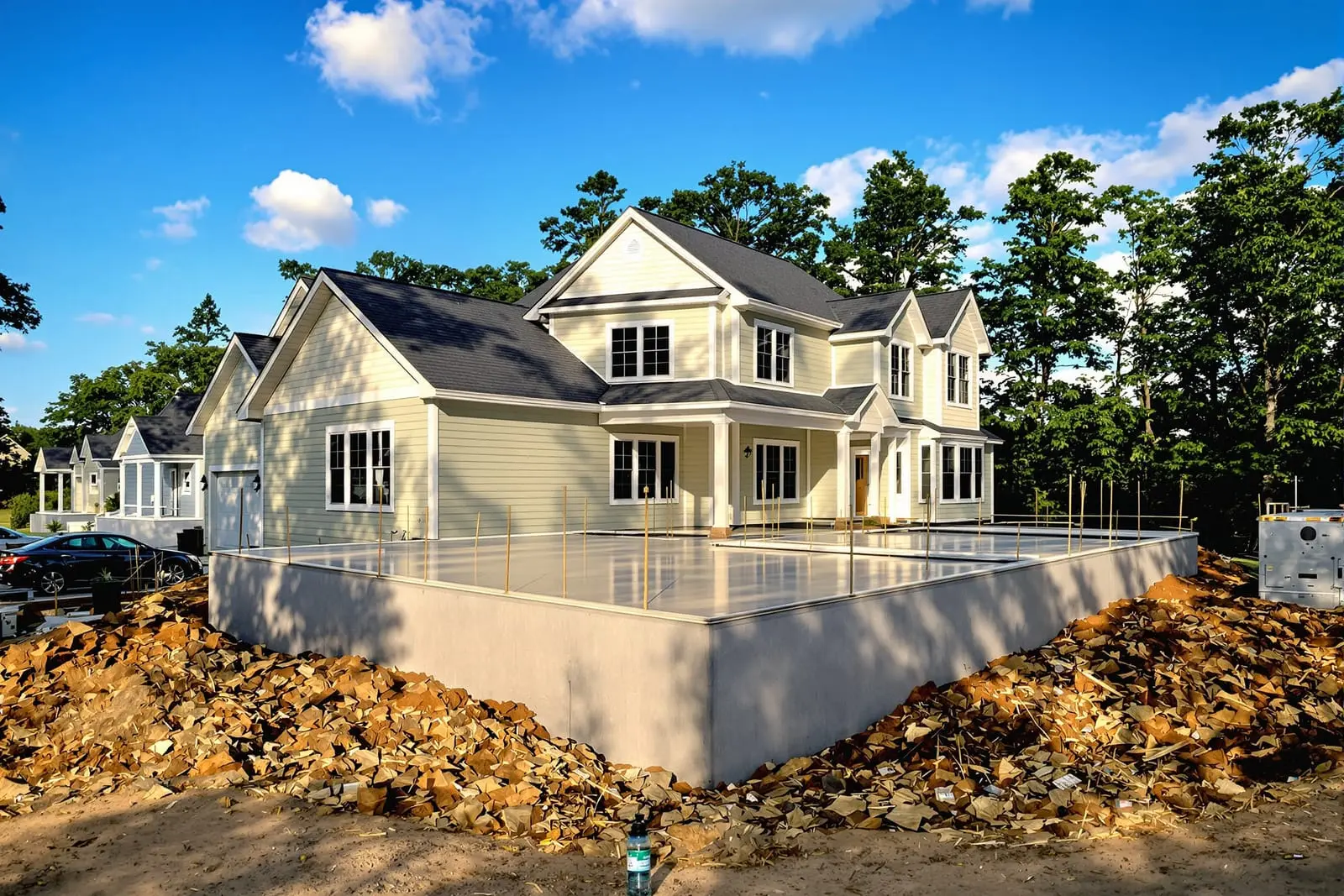
For dependable concrete footings in Austin, TX, Primetime Concrete Austin delivers structural support you can trust. We excavate, form, and reinforce footings and foundations for homes, additions, and retaining walls. Our team follows local codes and engineering specs to keep your project stable for the long term.
Primetime Concrete Austin provides professional concrete footings throughout Austin, TX and the surrounding area. Our licensed, insured crew delivers safe, clean, on-time work with a free estimate before anything begins. Call (737) 271-7931 or request your free quote.
Concrete foundations and footings for Austin homes and businesses
Concrete foundations and footings are what keep your structure from shifting, cracking, or sinking in our Central Texas clay. At Primetime Concrete Austin, we focus on foundations that are designed specifically for Austin soil conditions and temperature swings, not a one-size-fits-all plan pulled from another region.
When you call us, we start with what is going on at your exact location: soil type, slope, nearby trees, drainage, and the weight of the structure you are planning. A small ADU in East Austin needs a very different footing design than a two-story custom home in Westlake or a metal building in Buda. We walk the site with you, explain what we see, and then match the footing depth, width, and reinforcement to those conditions so you understand why certain choices are being made.
Our goal is to give you a foundation that will stay level, drain correctly, and support your building through wet winters and hot, dry summers, so you avoid costly repairs later.
How we evaluate your site before pouring concrete footings
Good concrete footings start long before the concrete truck shows up. Our crew at Primetime Concrete Austin completes a detailed pre-pour assessment so your footing system is matched to the actual soil and load it will carry.
First, we check soil conditions with test holes or existing cutouts. Much of Austin has expansive clay that swells when wet and shrinks when dry. In some pockets near the Hill Country, you may have thin soil over limestone. These differences affect how deep we go, whether we need isolated pier footings, and how we reinforce the slab.
Next, we assess drainage and elevation. We look at how water currently moves across your property, whether the lot is flat, sloped, or terraced, and where runoff is likely to collect during heavy storms. If water will sit along the edge of the future foundation, we recommend grading or French drains to keep moisture away from the footings.
We also review structural plans, building codes, and wind loads. For example, garages that will support lifts or heavy equipment need thicker footing beams than a basic storage building. We coordinate with your engineer or designer, or connect you with one if needed, to be sure the footing design meets City of Austin or surrounding county requirements.
Step by step: our concrete footings and foundation process
Every project is a little different, but our footing and foundation process follows a clear series of steps so you know what will happen on your property.
1) Layout and excavation. We mark your building footprint with string lines and stakes, then spray paint beam locations and any pier or thickened-edge footings. Using equipment sized for your property, we excavate trenches to the specified depth, commonly 18 to 36 inches in our area, deeper in some engineered designs.
2) Subgrade preparation. We compact the exposed soil and add a base layer, typically crushed limestone or road base, to improve drainage and reduce movement. In areas with highly expansive clay, we may remove additional native soil and replace it with select fill before compacting.
3) Formwork installation. We set up wooden or metal forms that define the height and shape of the slab and beams. This is where we get your finished floor elevation right in relation to surrounding grade, driveways, and existing structures. Tight, well braced forms keep your foundation dimensions accurate.
4) Rebar placement. We install steel reinforcement in footings and beams following engineered spacing and bar size. In Austin, that often means continuous beam cages tied with cross ties and dowels to control cracking. We chair the rebar off the ground so it sits in the proper location in the cured concrete.
5) Vapor barrier and utilities. Where specified, we add a poly vapor barrier under the slab area and coordinate with your plumber or electrician for embedded lines. It is important that any plumbing penetrations are properly sleeved so movement in the slab does not damage pipes.
6) Concrete placement and finishing. We schedule the concrete delivery for cooler hours when possible, especially in summer, to keep it workable and reduce rapid moisture loss. Our crew places the mix evenly, vibrates beams and footings to remove air pockets, then screeds and trowels the slab to the required finish.
7) Curing and quality checks. We keep the slab and footings moist during the early cure period, use curing compound when appropriate, and return to saw control joints if required. Before turning the foundation over to your builder, we check elevations, edges, anchor bolt layout, and general surface condition.
Foundation and footing options we install in the Austin area
Primetime Concrete Austin offers several types of concrete foundations and footings, and we help you choose what makes sense for your structure and site.
Slab on grade with thickened edge. This is the most common option for homes, garages, and shops in Austin. The outer perimeter acts as a deep beam or footing that carries much of the load, and interior beams are laid out based on span and soil conditions.
Pier and beam with concrete footings. For sites with significant slope or areas where you want accessible crawl space, we pour concrete piers and footings that support a framed floor system. Proper footing size and depth keep the structure stable even when surrounding soil expands and contracts.
Monolithic slab foundations. For smaller structures like sheds, workshops, or ADUs, a monolithic pour combines the slab and footing in a single placement. This can be cost effective when the design and soil allow it, provided the edges and thickenings are correctly sized and reinforced.
Specialty and heavy duty footings. These include isolated spread footings for columns, equipment pads that support concentrated loads, and reinforced foundations for retaining or load bearing walls. In commercial and industrial settings, we might use deeper footings and heavier rebar to accommodate forklifts, trucks, or machinery.
We walk you through the pros and cons of each option based on cost, performance, access, height off grade, and how you plan to use the space in the future.
What affects the cost of concrete footings in Austin
Foundation and footing pricing is driven by more than square footage, and understanding those factors helps you budget and compare quotes fairly.
Soil conditions. Expansive clay that requires deeper beams, more piers, or select fill will cost more than stable, shallow rock. If we need to over excavate and replace soil, that dirt work adds to the total.
Footing depth and complexity. A simple rectangular slab with standard beam depth is more economical than irregular footprints, thickened areas for load bearing walls, or stepped footings on a hillside. More corners, jogs, and elevation changes mean more labor and formwork.
Reinforcement and concrete volume. Heavier rebar cages, closer spacing, or higher strength concrete mixes all increase material cost but can be necessary for long term performance. We explain where upgrades matter and where they may not add value for your specific structure.
Site access and timing. Tight backyards in central Austin sometimes require smaller equipment and more hand work. Scheduling during extreme heat or after heavy rains may require additional labor or ground preparation. In general, spring and fall are ideal for footing work here because the temperatures are moderate and the soil is easier to work.
Permits, inspections, and engineering. Inside city limits or in certain jurisdictions, you will need structural plans and inspections. We coordinate with your engineer and inspector so you pass the first time and avoid delays that could increase costs with your builder or other trades.
Common foundation problems in Austin and how we help prevent them
Our area has a reputation for cracked slabs and sticking doors. Many of those issues can be traced back to inadequate concrete footings, poor drainage, or shortcuts during construction. Primetime Concrete Austin focuses on preventing these problems before they start.
Uneven settling. When part of a foundation rests on soft, poorly compacted soil, it can sink more than the rest. We combat this with proper compaction, appropriate base materials, and footing depths that reach more stable soil. On engineered jobs, we follow the geotechnical report exactly instead of guessing.
Seasonal movement. Austin clay shrinks in drought and swells when saturated. We address this by designing footings with enough depth and beam stiffness, providing drainage solutions that keep water away from the perimeter, and recommending consistent watering practices around the foundation once the home is built.
Improper reinforcement or joints. Too little rebar or poorly located control joints can lead to unnecessary cracking. We use continuous rebar cages in beams, tie intersections securely, and follow joint layouts that match your building use. Where cracking is structurally harmless but likely, we place control joints so cracks occur in planned, less visible lines.
We are also available to assess existing structures that may need additional support, such as new interior footings for removed walls or added equipment. When we tie new work into old slabs, we use dowels and epoxy anchoring so loads are shared correctly.
Why local experience matters for your concrete foundation
Pouring concrete footings is not just a technical task, it is a long term commitment to how your home or building will perform in Austin conditions. That is why working with a truly local company like Primetime Concrete Austin matters.
We know the neighborhoods, from South Austin clay pockets that stay wet for days after a storm to rocky sites closer to the Hill Country where hitting ledge rock is likely. That experience allows us to anticipate issues before they slow your project or surprise you with change orders.
We time pours around Central Texas weather patterns. In the hottest months, we schedule early morning placements and use methods to keep the concrete from drying too fast, which helps reduce surface cracking and ensures proper strength. After heavy rains, we take the extra time to verify that the subgrade is firm and dry enough so your footings do not end up on mud.
Most important, we communicate clearly. You will know what type of footing system you are getting, why it is designed that way, what it will cost, and how long it will take. If you are working with a general contractor, we coordinate directly with them. If you are managing your own project, we walk you through each stage so there are no surprises when the concrete truck pulls up.
“
Professional concrete foundations & footings, done right the first time, quality materials, honest pricing, and results that last.
Primetime Concrete Austin
Concrete Foundations & Footings Across Our Service Area