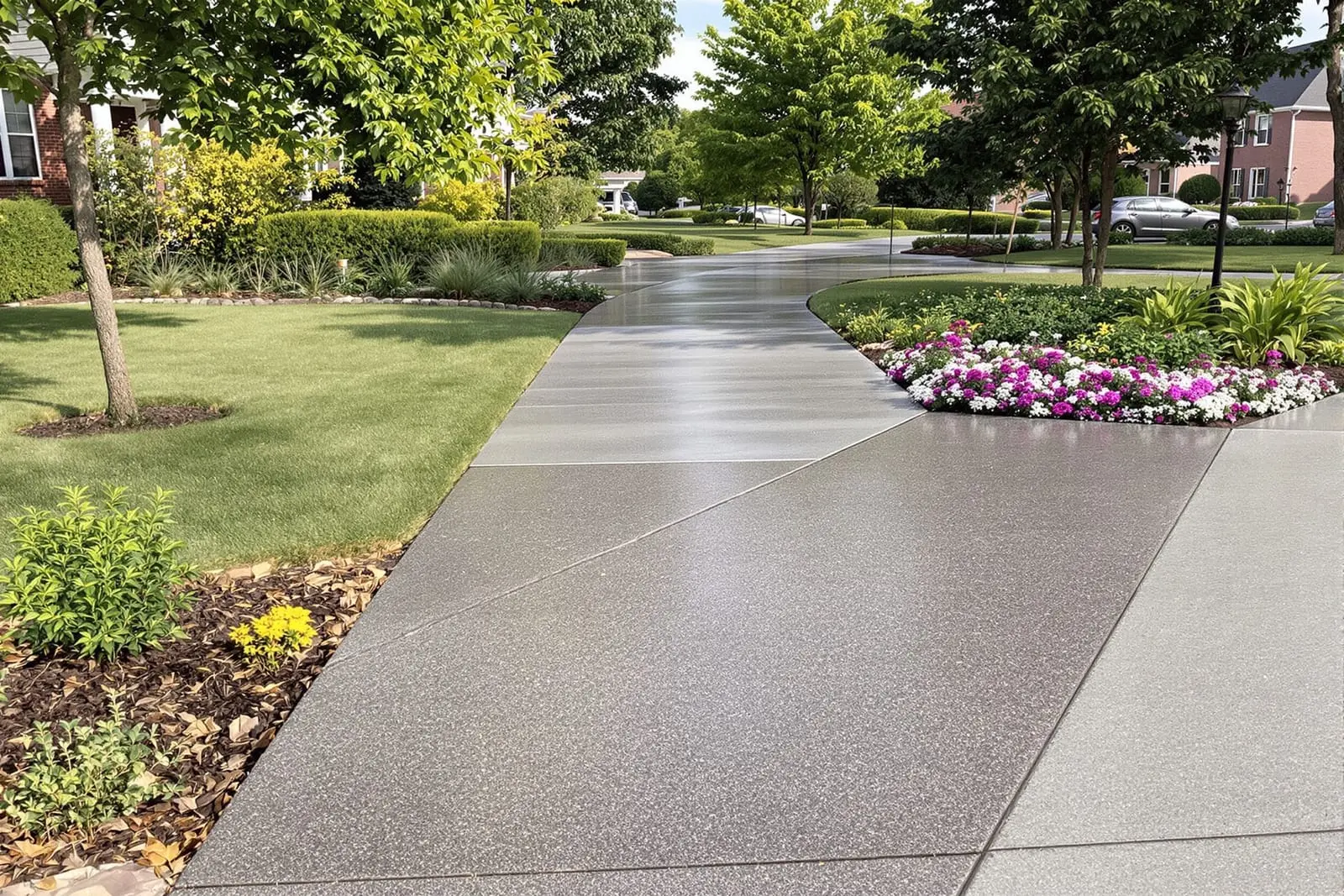
Primetime Concrete Austin offers concrete walkway installation in Austin, TX to connect driveways, entries, and outdoor spaces. We design paths that are comfortable to walk on and properly sloped for drainage. From straight front sidewalks to winding garden paths, we pour concrete that looks clean and lasts for years.
Primetime Concrete Austin provides professional concrete walkway installation throughout Austin, TX and the surrounding area. Our licensed, insured crew delivers safe, clean, on-time work with a free estimate before anything begins. Call (737) 271-7931 or request your free quote.
Concrete walkways and sidewalks built for Austin properties
Concrete walkway installation is not a decorator add-on. It is a permanent path that has to handle foot traffic, rain, heat, and time. At Primetime Concrete Austin, we focus on building walkways and sidewalks that match how your property is actually used, not just how it looks on a drawing.
For homes, that might mean a simple straight path from driveway to front door, a curved garden walkway around existing trees, or safe access along a steep side yard. For commercial and multifamily properties, it can mean wider sidewalks, ADA compliant slopes, and high wear surfaces that hold up to heavy foot traffic. We look at how people move across your site first, then design the concrete layout around that.
Austin clay soils expand in wet seasons and shrink during drought. Combined with the city’s hot summers and sudden storms, poor quality concrete work cracks fast. Our approach to concrete walkway installation factors in local soil conditions, drainage patterns, and shade vs full sun exposure so the slab has the best chance at a long, low maintenance life.
Our step by step process for concrete walkway installation
When Primetime Concrete Austin installs a concrete walkway or sidewalk, we follow a clear sequence so there are no surprises.
1. Site walk and layout: We walk the route with you, mark utilities, look at water flow, and set the final path with paint or flags. This is where we decide width, curve vs straight, and surface finish.
2. Excavation and base prep: We remove turf, roots, and loose soil to the depth needed for concrete plus base. On most Austin residential properties we use a compacted crushed limestone base because it locks in well with our local soils and provides drainage. For heavy use or commercial sidewalks we increase base thickness.
3. Forms and grading: We set wood or metal forms to the exact height and slope we want. Sidewalks usually need a 1 to 2 percent slope so water runs off without creating a trip hazard. We check elevations so the new concrete meets existing driveways, porches, or patios cleanly.
4. Reinforcement: Depending on soil, thickness, and use, we may add rebar, welded wire mesh, or fiber reinforced concrete. For narrow garden walkways in stable soil, fiber alone may be enough. For sidewalks near trees, sloped yards, or drive approaches, we typically add rebar to reduce cracking and edge breakup.
5. Pouring and finishing: We pour the concrete, then screed, bull float, edge, and trowel it. Most walkways get a broom finish for slip resistance. Decorative options, like seeded aggregate or light stamping, are set at this stage if you choose them.
6. Control joints and curing: We cut or tool joints to control where the concrete is most likely to crack. These are not flaws, they are planned weak points that protect the rest of the slab. We then apply a curing method or sealer appropriate for the weather that day so the concrete gains strength evenly.
7. Cleanup and walk time: Forms come off, edges are backfilled, and the area is cleaned. In typical Austin temperatures, light foot traffic is usually ok in about 24 to 48 hours, but we discuss exact timing with you based on the mix and conditions.
Material, design, and finish options for your walkway
Concrete walkway installation does not have to mean a plain gray strip. Primetime Concrete Austin offers a range of thicknesses, mixes, and finishes, depending on how you will use the walkway and how you want it to look.
Thickness and mix: Standard residential walkways are often 4 inches thick. In areas that will occasionally see light vehicle traffic, like a path across a driveway, we may recommend 5 to 6 inches. We use a compressive strength mix appropriate for the job, and can specify air entrainment or fiber reinforcement when freeze events or soil movement are concerns.
Finishes: For most Austin homeowners, a medium broom finish is the best balance of traction and ease of cleaning. Around pools or steep slopes we can use a slightly heavier broom for grip. If you want something more decorative, options include integral color, stained concrete, exposed aggregate where we wash the surface to show the stones, or light stamping that mimics stone or brick. We keep the texture practical so it can still be shoveled or swept.
Edges and borders: Simple rounded edges work well for basic sidewalks. For front walkways, we can form gentle curves, add a contrasting border strip, or saw cut clean patterns that break up large areas. Strategic use of borders and joints helps prevent random cracking while making repairs easier if a small section is ever damaged.
Accessibility and comfort: We consider wheelchair use, strollers, and mobility needs when we set slopes, transitions, and joint spacing. Bright sun and heat are also real factors in Austin, so for south and west facing walkways we can recommend lighter concrete colors and less aggressive textures so surfaces do not get uncomfortably hot or rough.
What affects cost for concrete walkways and sidewalks in Austin
Pricing for concrete walkway installation is driven by more than just square footage. When Primetime Concrete Austin puts together a quote, we explain each factor that affects the final number so you can make trade offs where it makes sense.
Access and layout: A straight, easily accessible walkway in a front yard is always more economical than a winding path around the back of a house that requires hand work and wheelbarrows. Tight spaces, stairs, or steep slopes can add labor time.
Thickness, base, and reinforcement: Thicker concrete, deeper or higher quality base material, and additional rebar or mesh all increase cost, but they also increase durability. For high traffic or problem soil areas, cutting corners here usually leads to early cracking and repairs.
Tree roots and removal: Mature live oaks and other trees common in Austin often have surface roots that push up walkways. If we need to carefully remove or bridge over roots, that adds complexity. Sometimes we recommend root barriers or minor re-routing of the walkway to protect both the tree and the concrete.
Decorative work: Integral color, stains, stamping, exposed aggregate, and custom borders add time and materials. We often suggest using decorative finishes on the most visible sections, like the front entry, and using standard broom finish on side yard or utility paths to manage budget.
Drainage and tie ins: Creating proper drainage may involve extra grading, adding small drains, or tying the walkway into existing concrete or masonry. Doing this correctly at installation prevents water from backing up toward your foundation or pooling at low spots, which is far more expensive to correct later.
Permits and city requirements: For sidewalks in the public right of way, or projects that alter city sidewalks at driveways, Austin and some nearby jurisdictions can require permits and inspections. We let you know upfront if your project falls into that category.
Common issues with walkways and how we prevent them
Most of the problems people call us about on old walkways are avoidable with proper planning and execution. Primetime Concrete Austin addresses the main failure points during design and installation instead of after the fact.
Random cracking: All concrete will crack somewhere. The goal is to control where. We space control joints correctly for the slab thickness and walkway width, avoid long skinny panels, and reduce re-entrant corners where cracks tend to start. When we must create inside corners, we often add reinforcement to reduce stress.
Settlement and trip hazards: In parts of Austin with fill dirt or poorly compacted soil, slabs can sink and create uneven edges. Before we pour, we compact the base properly, remove soft organic material, and in suspect areas may recommend increasing base thickness or using rebar that ties sections together.
Water pooling: Standing water on walkways leads to slime, algae, and winter slip hazards when freezing occurs. We set the walkway to drain in a specific direction, check it with levels before we pour, and avoid creating low spots at transitions to driveways or porches.
Tree and landscape movement: Tree roots and shifting soil can tilt or crack walkways. Where trees are close, we may suggest slightly wider control joints, separate panels that can move independently, or path adjustments around the main root zones. We discuss realistic expectations and future maintenance so you know what is likely to happen over time.
Surface wear and flaking: Poor curing, the wrong finish for hot weather, or using deicing chemicals can damage surfaces. We time finishing steps based on real site conditions, not the clock, and use curing methods suitable for Austin’s heat and sudden rain. We also give you clear instructions for the first month of use, which is when most damage from misuse happens.
What to know before hiring a concrete walkway contractor
Before you commit to concrete walkway installation, it helps to know what to ask. Primetime Concrete Austin encourages you to compare contractors based on process, not just price.
Ask how they handle base preparation for your specific soil. In Austin, answers like “we pour right on the ground” or “we just scrape the grass” are red flags. You should hear a clear plan for excavation depth, base material, and compaction.
Ask who will set slopes and grades. The person doing layout should understand drainage, ADA considerations if applicable, and how to tie into existing concrete. If they cannot explain how water will leave your new walkway, look elsewhere.
Ask about joint spacing and reinforcement choices. A good contractor will be able to show on the layout where control joints will go and explain whether they use rebar, mesh, fiber, or a combination for your project.
Ask about timing and weather. In Texas heat and storm seasons, timing matters. We plan pours for the part of the day that fits your site and the forecast, and we have a fallback plan if a storm rolls in sooner than expected.
Ask to see local work. A contractor who regularly works in Austin should have sidewalks and walkways you can drive by. When you talk with Primetime Concrete Austin, we can point you to projects in neighborhoods similar to yours so you can see the finishes, joint layouts, and how the concrete has aged.
If you are ready to discuss a new concrete walkway or sidewalk, or to replace one that is failing, we can walk the property with you, give you clear options, and price each choice so you understand what you are paying for and what lifespan to expect.
“
Professional concrete walkways & sidewalks, done right the first time, quality materials, honest pricing, and results that last.
Primetime Concrete Austin
Concrete Walkways & Sidewalks Across Our Service Area